Revisiting saltation and causality
Two dominant theories that preceded Darwin's theory of evolution were orthogenesis and saltation.
Both were considered obsolete by Darwin's followers, however, saltation (a sudden and
large mutational change from one generation to the next), was, with emerging evidence, eventually
accepted as a viable alternative to gradualism, although still considered as reserved for
non-complex organisms.
Orthogenesis (hypothesis that organisms have an innate tendency to evolve in a definite
direction towards some goal due to some internal mechanism or "driving force") is still considered
obsolete on macro-level, although its notion that evolution represents progress has been widely accepted.
However, if one can challenge the absolute reference frame in Special/General Relativity and
uniformitarianism in geology (notion that geological events occur at the same rate now as they have always done) correlated with gradualism in biology, one
can generalize saltation and validate orthogenesis.
I have challenged both in the theory of Complete
Relativity (CR) and analysis
of the Solar System in the context of the same theory.
What is relevant in this context, is the postulated existence of discrete vertical energy levels of relative invariance of physical laws (reinforcing self-similarity) and hypothesized planetary
neurogenesis. Complete relativity implies self-similarity of universes (scales of energy, or existence) and requires processes to be relatively replicated across different scales.
This is the basis for the hypothesized equivalence of standard organismal development and evolution of life on the planet. More specifically, evolution during Phanerozoic is hypothesized to
be relatively equivalent to standard neurogenesis or its protoform.
Since development of living beings of our scale in coded and the outcome can hardly be changed to significant degree (with no code changes) - it can be stated that this quantum of
evolution has a goal. And if that is true, then it must be true for its [relative] equivalent on larger scale.
This is obvious if one compares living beings on Earth with proteins and cells (relative to Earth, humans are likely proteins). Both, development (synthesis) or cultivation of individual
protein/cells and their organization into tissue, organs and networks is all coded.
Some processes are relatively random (pseudo-random) and such events occur during slow gradual evolution (weak evolution) but these are punctuated by events of strong
evolution.
Strong evolution includes saltation, which, with scale invariance, cannot be limited to bacteria and other non-complex organisms.
By this theory, humans are not special nor are their actions unnatural (certainly not absolutely) and any strong anthropogenic influence on evolution may be correlated with a strong evolution event.
When this is coupled with hypothesized oscillation and periodic punctuations in decay rates of elements, equivalence between the current and other larger extinction events may not only be
qualitative (in terms of associated events, although even
equal triggers cannot be ruled out) but quantitative too (at least in terms of temporal periods during the event).
Current accelerating changes in climate and environment correlated with accelerated human industrial and technological development strongly suggest we are in the midst of a strong
evolution event.
Synthetic biology is developing rapidly, it has already enabled
creation of viruses that can transform DNA of living
individuals. It won't take long before human induced horizontal gene transfer will transform one complex lifeform into new species (chimeras may be considered as precursors to this) in a
single generation.
One strong evidence for coded evolution would be apparent violation of causality on larger scale.
In CR, cause and effect must be relative and causality can be relatively violated - unlike the causality in Special/General Relativity, it is not fixed (based on an absolute constant).
Entanglement between past and relative future exists, this is the entanglement between different scales of equivalent phenomena, thus, the uncertainty in violation is proportional to
distance between past and real future.
In CR thus, causality is, effectively replaced with correlation. Space and time are relatively equivalent and order of events in time is relative just as order in space.
Violation of causality is regularly confirmed on
standard quantum scale, but could also
explain certain phenomena on larger scale.
Bacteria have been found resistant to antibiotics years before these were developed. In example, one
strain was, in 1915, resistant to penicillin and erythromycin, which went into use against human infections in 1942 and 1952, respectively.
One explanation for this is that antibiotics exist in the wild and resistance has evolved as bacteria fought with each other.
Certainly, that is a possibility with certain probability but multiple true interpretations are common in nature and one of these is violation of causality.
While resistance to antibiotics may exist in the wild, how to explain bacteria
on Earth equipped for survival on Mars?
Extreme resistance to radiation of Deinococcus radiodurans could indicate it is an organism destined to survive a major mass extinction of a strong evolution
event (if this is the last strong evolution event of planetary neurogenesis, conditions on Earth's surface will likely become Mars-like, but even if it is not, temporary magnetic field collapse is possible with
each major mass extinction and, with it, exposure to radiation).
Some argue that protection
from radiation here is a side-effect of protection from desiccation. However, radiation and desiccation are often coupled - as evident on Mars, and, again, multiple interpretations are
common (even required with CR).
While current Earth's magnetic field strength may not be different from long-term average, it is decreasing and magnetic dip poles are moving rapidly. It may not be strong evidence, but it goes in
favour of the collapse hypothesis.
In the analysis of the Solar System in CR context I have found strong correlation between Earth's mantle discontinuities and major mass extinctions, which is a strong evidence for coded development
of Earth.
Strong evolution event
Horizontal transfer of genes between individuals and even between evolutionary distant species is a common source of genetic variation in bacteria. Genetic studies have shown that mitochondria and
chloroplast in eukaryotic cells have evolved from bacteria that have been trapped in, or have colonized, a primordial host cell, establishing a [endo]symbiotic relationship with that
host. Taking a holistic approach and looking at the whole collective of life in a particular ecosystem, it becomes obvious that a major driver of evolution is symbiosis - not the competition
that, in some cases, may dominate intra-species. Within species, nature thus might be selecting those best fit to survive that competition, however, intra-species evolution is generally weak
evolution. Symbiosis however, may generally be a [mental] precursor to large inheritable changes in organisms.
We know that environments change, requiring adaptation for survival. However, there are thresholds - some changes may be too big and/or too fast for species to adapt, leading to extinction.
During weak evolution, adaptation is achieved through sexual recombination. Asexually reproducing species, unless they can replace sexual gene shuffling, must then be more prone to extinction.
However, research has shown that even multicellular asexual
species (like bdelloid rotifers) can survive for tens of millions of years or more. They survive due to strong affinity for saltation (particularly horizontal gene transfer). But when do the
genetic changes occur?
Most likely, in a response to stress (or, more appropriately - synchronized with stress). Antibiotic stress in bacteria, for example, will, for some individuals be coupled with genetic changes
enabling resistance. But this can be any stress leading to DNA damage - dessication, radiation exposure, toxic chemicals. Consider a damaged nuclear DNA in an eukaryotic cell. These cells are in a
constant interaction with bacteria, but it is during the DNA repair that it becomes most likely that foreign DNA may be integrated into nuclear DNA (due to leaky cell membranes). This can even be a
naked DNA strand (e.g., coming from bacteria whose cell walls have been damaged in the same event).
There, thus, exists a strong correlation between lack of sexual reproduction and affinity for horizontal gene transfer or saltation. But is this limited to microorganisms? Unlikely - given what is
known so far, the question is - why would it be forbidden at all times, especially during strong changes in the environment when it could prove beneficial or possibly even required for survival?
I hypothesize that, wherever strong environmental changes are synchronized with changes in fertility (possibly also increase in lifespan), these also signal the exchange of vertical gene
transfer for horizontal gene transfer as the dominant gene transfer mechanism. And here, most likely transfers are, obviously, transfers between organisms in symbiosis.
We commonly treat cells as components of more complex organisms, however, nature doesn't generally respect our categorization. Every cell is also a single-celled organism, so its affinity
for horizontal gene transfer is not completely subdued. It is rather dependable on environmental conditions. What happens with decreasing fertility of the host? In that case, a cell cannot
rely anymore on the sexual recombination usually initiated by the host, so it may be increasingly open to horizontal gene transfer. It is well known that older people usually have a higher
risk of disease such as cancer - this may then be correlated with increasing [epi]genetic instability coupled with decreasing fertility with age. Note that, over the past
decades, the
age for increased risk of cancer has been lowering, while at the same time fertility
has been decreasing in younger people. Probably not a coincidence.
We are currently witnessing accelerating climate (environmental) changes but we are also witnessing diminishing fertility, decrease in intra-species sexual relationships and increase in
relationships and mentalities which effectively inhibit vertical gene transfer (reproduction), at least in humans.
Humans are also increasingly stimulating horizontal gene transfer, and not only between bacteria. Human genomes are being altered. With all taken into account, it appears it is not a question whether horizontal
gene transfer will soon dominate, but will that transfer be stimulated solely by humans (e.g., with diminishing fertility, desperately trying to ensure survival) or will it proceed in
a more natural way, or both. And should the human way be interpreted as a relatively coded natural way? Everything's possible, after substantial research, my vote goes for superposition
of solutions.
Horizontal gene transfer and genetic fossilization of symbiosis should not be limited to gene transfer stimulated by humans. This should be occurring in nature during any strong evolution event (usually correlated with mass
extinctions). Evidence for this is emerging in nature. One example is the
current evolution of nitroplasts (nitrogen fixing organelles derived from endosymbiosis), which
has been discovered recently. Recent experiments
on microbes show that endosymbiosis between compatible lifeforms can be established very quickly and can easily become inheritable.
And what are the environmental stressors in the current strong evolution event? Diverse, it seems. There are toxic chemicals in the air (already suspected to be correlated with loss of
fertility) and water, there are droughts, there is increasing radiation - occurring with the decrease of Earth's magnetic field strength but there are also nuclear disasters and the apparently
increasing threat of nuclear war.
Who goes extinct?
As I have hypothesized elsewhere, every species may contain relatively polarized and relatively non-polarized individuals (where one group may generally represent a minority). During strong evolution
events, one group (sensitive to horizontal gene transfer) is evolving with environmental stresses at an exponentially accelerating rate while the other does not significantly change
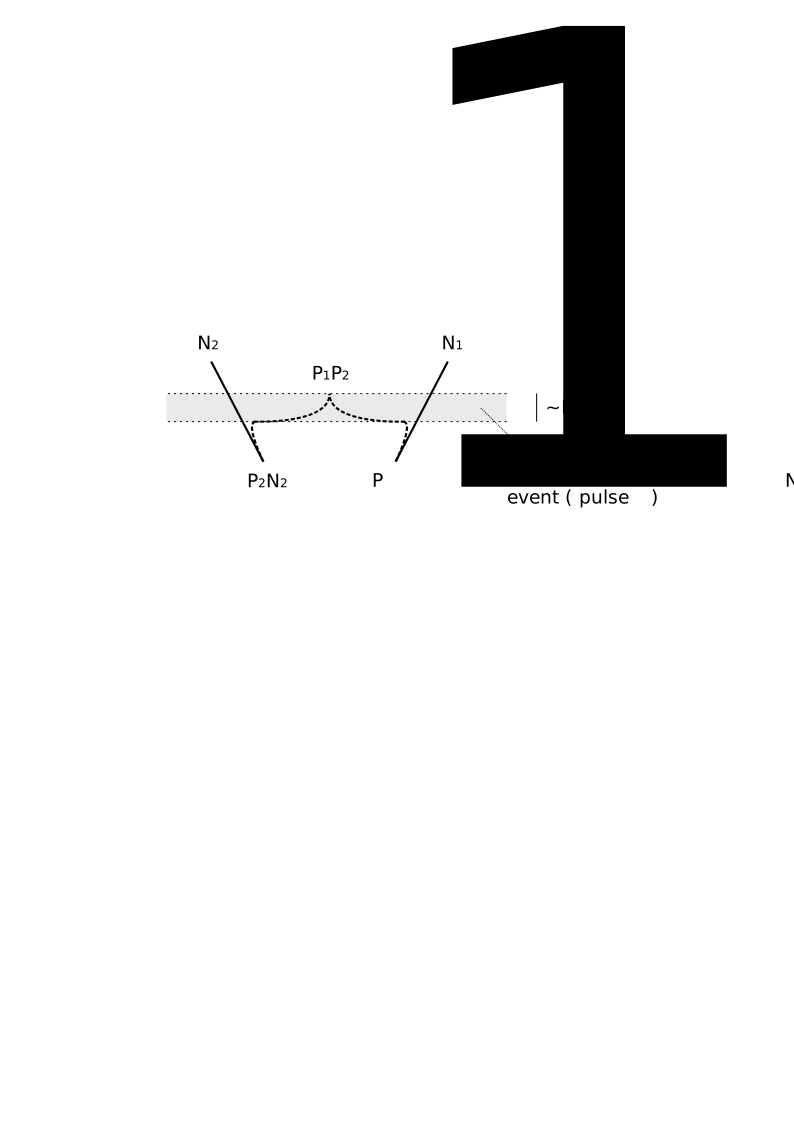
physically at all. This is how divergence and convergence in evolutionary trees occur during a strong evolution event, as shown in Fig. \fig1 (P represents polarized individuals or polarized subspecies of
species, N represents neutral individuals or neutral subspecies).
Fig. \fig1: Strong evolution event
The large scale strong evolution event of life on Earth may last on the order of kiloyears (millennia), centuries or less (acceleration of evolution is exponential so the strong evolution event may last for millennia in
total, but its symptoms may be apparent only during its peak). In the Fig. \fig1, P1N1 and P2N2 represent two different species composed of neutral (N) and
polarized (P) subspecies. During a strong evolution event polarized subspecies converge into new species (P1P2), while neutral subspecies diverge into separate species. Another
interpretation is valid as well - the P1N1 and P2N2 can represent two individuals of different species, who both have polarized and neutral components (of
which one dominates), the P1P2 then represents a chimera (i.e., P3) of polarized components of individuals (with a negligible neutral component) in which polarized components
dominated, while decoupled N1 and N2 represent individuals whose polarized component was subdued. Transformation of consciousness, a phenomenon some individuals experience during
life, can be interpreted as a precursor for this. Transformation of consciousness can also be interpreted as a localized strong evolution event (or a quantum of a large scale strong evolution event), as
during the event, one component is subdued while another is inflated, effectively, one is exchanged for the other (e.g., polarization for neutrality). Transformation of consciousness is only relatively
synchronized with the transformation of the body, generally it may precede body transformation in progressive evolution, however, the two may be strongly synchronized at the peak of strong
evolution. With complete body transformation, diverged N1 and N2 can now be interpreted as new species, prior to that, their rising mental divergence from dominantly
polarized individuals may not be recognized as speciation. I argue, however, that these should be formally recognized as different subspecies, as physiological differences can be enormous. The two
interpretations of Fig. \fig1 are not mutually exclusive, in fact, they should generally both be valid, in some reference frames one will precede the other, in other they will be more
synchronized. Note that in Fig. \fig1, transformation of the body of polarized individuals is relatively fast (synchronized with accelerated evolution), while neutral individuals are effectively
physically unaffected by the changes in the speed of evolution. In other words, the former strongly evolve bodies while the latter strongly evolve consciousness. However, unless the changes are
temporary, transformation of consciousness will follow in the former and transformation of the body will follow in the latter. But this transformation is likely to be slow. Thus, during weak
evolution, in the former the transformation of the body effectively guides evolution of consciousness, in the latter, vice versa. This is accelerated in the next strong evolution event
where, now, the former strongly evolve consciousness while the latter strongly evolve the body.
Note that affinity for horizontal gene transfer may be [effectively] controlled by a single gene and once it is [incorporated and] turned on (the probability for which is increasing with
environmental stress), it enables saltation even in complex multicellular eukaryotes like humans.
There are many species of life on Earth that have changed very little, if at all (at least in morphology), during vast geologic periods. Strong resistance to evolution of these species
could be interpreted as evidence for the existence of the above hypothesized switch. These species would thus posses genetics (and/or epigenetics) inhibiting horizontal gene
transfer, hence would evolve very weakly even during strong evolution events, and can be classified as neutral. Correlated with this are probably the specific characteristics of the immune
system, e.g., lack of immunoglobulin-M, as detected
in the coelacanth. Of course, correlated with evolutionary stagnation can also be the isolation or stability of the environment, but there is probably no strong causal relationship
here. One could argue, for example, that environmental changes are mostly correlated with polarized species (e.g., polarized humans are driving the climate change and extinction of
species, while neutral ones tend to live in harmony with the environment). After all, species like coelacanth are certainly not isolated from microbes, lack of immunoglobulin-M suggests that these
species may have a non-polarized relationship with them (strong/weak defence system correlates with strong/weak susceptibility to diseases). The logic is similar to the typical predator-prey
relationship, e.g., a lion will chase a running antelope but won't usually bother with a much easier prey (like a human), or, in general, won't bother with an animal that is not reacting to it. The
lack of reaction/interaction with diseases and the sustainable interaction with the environment is probably the reason why coelacanth didn't [completely] go extinct - it is the polarized subspecies
of the early coelacanth that have either gone extinct or have evolved into different species.
One of the most likely chimeras (as precursors of new species) in the current strong evolution event are probably mixtures of human and canine DNA, as I've
already predicted elsewhere. But other combinations are possible.
Decrease in sexual interaction between individuals of the same species may be synchronized with increase of sexual interaction inter-species. This can be interpreted as a precursor for genetic
fusion and increasing sexual compatibility between distantly related species (which are becoming less and less distant with increasing entanglement). When coupled with environmental stresses on cells, inter-species sexual intercourse significantly increases the
probability of gene exchange between sexually interacting species, through bacterial and viral vectors. Not only that - it makes it more likely that germ cells will be affected. Gene exchange will
be decreasing differences between the two species, and this should lead to compatibility enabling sexual reproduction eventually (assuming there are no inherited fertility issues at that
point) for this new [chimeric] species. However, the question remains - is this a precursor phenomenon ensuring survival or is this a desperate but doomed attempt of life to find
a way? It depends on the case, and in any case, free will is as relative as determinism.
However, the symbiosis does not have to be[come] sexual to result in fusion (although, this depends on how one defines sexual interaction and whether it involves sexual reproduction). Neither the
bacteria that became mitochondria nor the cyanobacteria that evolved into chloroplast did sexually interact with the host but, cumulative over time, genetic exchanges may be interpreted as
genetic recombination. Simply living (evolving) with a canine individual in the same house, for example, is the equivalent of bacteria and a primordial host interacting in a shared
environment. Strong evolution then leads to genome changes for polarized symbionts and the symbiosis itself may get fossilized into a new organism - e.g., enclosing the entangled
symbionts into a new body (sometimes coupled with motility loss in individuals), capturing one of them into the other (in case of existing membrane) or simply producing
a platypus-like chimera (which requires nuclear DNA changes in eukaryotes). In favour of this goes the extreme amount of SINE (Short Interspersed Nuclear Elements) sequences in
platypus (forming
up to 22% of its genome), as the intensity of horizontal gene transfer is likely proportional to the amount of SINE.
While most likely candidates for fusion are mutually interacting species sharing the environment, DNA can come from other sources as well. Food, for example. In order to maximize absorption of
proteins and other nutrients, cell walls of food cells are regularly damaged or modified by various ways of processing - before and after intake. DNA can survive all this processing
intact (especially if there has been no thermal stress - dry DNA only
starts to degrade at 130 °C). This exposes our cells to a lot of naked DNA. While gastric juice in the stomach, with its high acidity, will destroy (digest) most of this DNA, it can survive in
other places. With the presence of certain microbes (e.g., Salmonella bacteria) - which have the ability to create localized alkaline conditions, foreign DNA can survive even in the stomach.
During weak evolution, what one eats may not strongly affect individual's evolution, however, during strong evolution this may not be the case. Thus, changing diet can literally change, or
should be synchronized with the change of, the body of an individual. Changing diet from meat consumption to plant consumption is probably synchronized with exchange of extroversion for
introversion, or exchange of body complexity/sensitivity for consciousness complexity/sensitivity. A balanced diet then indicates [evolution towards] balance of extroversion and introversion.
Divergence is thus synchronized with convergence (fusion of species, most likely symbionts). Survival, however, depends on the details. The collective whose individuals do not fuse (non-polarized
individuals) with individuals of other species likely does not lose fertility either. Survival of such subspecies (now separate species) depends on the number of individuals mature for
sexual reproduction and their fitness to survive in a changing environment (if not physical, they could have mental capabilities and adaptations fit for survival - e.g., intelligence) or the ability
to find non-challenging environments.
As for the fusing subspecies, survival depends whether the fusion is fit more for symbiosis with the ecosystem or short-term competition and battle for remaining resources (which is probably the
likely outcome if the fusion will be induced by polarized, short-term profit driven, humans).
In any case, extinction should be relative. As hypothesized by planetary neurogenesis, major extinction on surface also represents a relative migration of life, where DNA (at least naked, if not
possible otherwise) is transferred into the upper layers of Earth's mantle.
Added Definitions. Small update in Relativity in hidden variables.
Relativity in hidden variables
Some might argue, as some
have argued before, that orthogenesis requires some supernatural force as there is no apparent internal mechanism or large scale DNA code equivalent.
However, the effects are apparent - inability to uncover hidden variables does not refute the hypothesis, otherwise Quantum Mechanics would be obsolete.
But, are the variables hidden at all in this case? Even the non-intuitive reality in QM can be resolved with CR, and, here, it might only be a matter of proper interpretation of observable phenomena.
Relative to Earth, humans may be precursors of protein (e.g., TGF-β equivalents, as I have suggested in previous works) or bacteria Mycoplasma (at least when comparing size and association
with cancer).
Bacteria are known to organize
into biofilms where individuals specialize and have different roles in a process equivalent to organismal development in animals, plants and fungi.
Thus, biofilms may be considered as [a collective of] precursor organs (passive, or introverted organisms).
Mycoplasma forming biofilm may have been, to some extent, incorporated into human genome in a strong evolution event making cancer genetically inheritable, possibly
manifested in TGF-β. This may have happened at the same time humans became cancer for the planet, at least ≈10000 years ago.
Human organizations are similar and may too be considered as large scale precursor organs. This would, on our scale, require mental connections (or correlations) between groups to be a precursor to physical
connections - although, in CR even mental connections have to be physical on some scale (e.g., forming flexible channels of entanglement, used for subconscious communication).
But one can see this on large scale too - freedom of human individuals is decreasing, they are increasingly becoming passive, replacing real with virtual, while communication between large
organizations (e.g., countries) is mediated by charged particles in physical wires. Movement between countries is increasingly being restricted, traffic is reducing to the transfer of goods
between countries but also between smaller organizations and individuals in these countries. There are signs of differentiation in human species mostly reflected in mental polarization or its
absence (which will become physical with synthetic biology or natural pandemics), but organizations in general are becoming more similar to organs.
Shall one ignore it all because one cannot directly identify the large scale DNA code equivalent at the moment or the direct evidence of orthogenesis (which, for example, would be
another Earth-like planet with humans on it)?
If one compares relative sizes, one letter of this code should be on the order of 10-2 m, for Earth.
If humans and similar animals are large scale proteins, entire standard genome represents [the equivalent of] a single gene on this scale. Is physical organization of genes into a DNA equivalent
necessary, especially in extremely introverted lifeforms with non-complex bodies? Or the code is on a scale invisible to us (unobservable)?
Note that these large scale genes are effectively connected at some scale during information transfer with changes in entanglement, and these transfers always exist at some scale.
For example, biofilm formation is not DNA coded but there are
numerous benefits of organization into symbiotic communities, which is generally assumed
to be spontaneous or a response to stress. Similar are human organizations relative to the planet. But these processes cannot be absolutely spontaneous and are likely not from a larger perspective.
Others have recognized that macro-consciousness
is formed by resonance of micro-conscious entities and that everything has to be conscious or alive to some degree. I have gone further and hypothesized that macro-consciousness does not emerge
from resonance of micro-conscious entities (e.g., neurons), rather that macro-conscious
entity exists separately, as a waveform which collapses to form a strongly localized consciousness with the organization of micro-conscious entities. A group of micro-conscious entities thus
co-evolves with macro-consciousness.
Some kind (species) of macro-consciousness could then be entangled with any organization.
Indeed, analysis of human organizations over time often hints at conspiracies (to reach certain goals) which are proceeding gradually at a generally slow rate, even over many generations (although
accelerating, during strong evolution) but no individuals seem to be consciously participating in them.
This coupling of a macro-conscious entity (soul) with an organization of bodies (relative to the macro-conscious entity) is, in my hypotheses, what constitutes an individual lifeform.
Sometimes, this will be a precursor to decrease (de-localization) of macro-consciousness when operation of this organization becomes hard-coded (fossilized) into DNA or DNA equivalents, with
previous mental connections now represented by physical expression on an observable scale. Such fossilization should be happening during strong evolution events.
Soul seems to have become a taboo in modern science, being considered obsolete. Nothing should be taboo in proper science and there should be no negative pressure on those who
want to revisit old concepts and ideas, especially if these have the potential to advance our understanding of reality. A reductionist, abusing Occam's razor, may see souls as
obsolete, however, any genuinely holistic approach will find them required.
Added chapter The role of viruses.
The role of viruses
The role of viruses in evolution of life has likely been greatly underestimated. As RNA/DNA carriers and very effective and efficient mediators in DNA exchange between species, along with
bacteria and archaea, they are the prime candidates for drivers of strong evolution.
Given what is currently known about life, the Solar System and the observable universe, the outer space should be full of life and the Earth is probably constantly or at least periodically being
bombarded with viruses and other microbes (possibly even frozen embryos ejected in rocks from other terrestrial bodies or even the past Earth itself) since its conception - something I have argued
for in my other works, but others
have suggested something similar already, even if in a
flawed paper. And if conditions are right (and conditions have been right on Earth for a long time now), at least some of these will survive, multiply and affect local evolution.
I am not sure, however, that these generally should be considered as salient components of orthogenesis - perhaps as epigenetic factors the role of which is to increase local diversity and, with
that, increase the resilience of local life (similar to the beneficial effect of early exposure of human life to non-sterilized environments).
If viruses have a role in orthogenesis it's probably more likely that such will come either from Earth's interior or will be manufactured in situ. However, it is the components of genetic
material that may be generally coming from space. With hypothesized melting of permafrost/ice on the poles during neurogenesis events (major extinctions), new viruses will certainly be introduced to
surface ecosystems.
Similar to standard DNA transcription in humans, it cannot be excluded that species - large scale enzyme (protein) equivalents, exist in Earth's interior (possibly even at the bottom of oceans) which
are manufacturing large scale messenger RNA molecule equivalents (viruses) which, when released on surface, affect differentiation of progenitor cells/proteins (e.g., humans), guiding evolution
into a specific (coded) direction.
However, one could then ask what is guiding species guiding humans in this way?
Well, if organismal development from conception to adult stage is driven subconsciously by the temporal genetic code equivalents encoded in the organism's soul, evolution of life on Earth's surface
should be orchestrated in the background by the Earth's soul itself. In that case, intermediates may not be necessary, humans and other organisms cultivated on Earth's surface could be
subconsciously guided directly.
Small revision/update in Souls and orthogenesis.
Souls and orthogenesis updated.
Added chapter Souls and orthogenesis. Small updates elsewhere.
Souls and orthogenesis
It is now well known that DNA is far from being a complete blueprint for the organization of cells into tissue, organs and organisms, rather it is mainly a blueprint for the construction of
components used in the development of an organism - although, some routines of local organization are effectively coded in the [epi]genome as well, through chained expression of genes (where
the expression of one gene eventually triggers - directly or indirectly - the expression of another). DNA alone may thus be interpreted as the scalar code for the assembly of components in
space, but the pathways of temporal evolution (organization) are probably encoded in souls as warped n-dimensional manifolds parts of which, with coupling-induced speciation
become hard-coded (fossilized) as the epigenome. Thus, the strength of influence of these manifolds on development depends on the strength of soul coupling and plasticity
of the local causality which should be lower if the collective represents an speciated organism, and higher if it is a precursor/proto organism. In other words, plasticity is inversely
proportional to the amount of hard-coded development. The probability for [soul-body] coupling, on the other hand, is probably proportional to hard-coded information. However, the strength
of coupling (which is proportional to the amount of consciousness) and information exchange are both changing during development.
Note that the body of Earth itself should be coupled to a large scale graviton (soul) and, without the gravitational manifold associated with this soul attracting/guiding
matter, the Earth probably would never form. Small scale souls coupling to bodies of lifeforms on Earth are highly correlated with this large scale graviton. Thus, evolution/development of
life on all similar planets in similar conditions should be equivalent. Indeed, after the performed analysis of the Solar System, I am pretty confident that complex life has been evolving
on at least two other terrestrial planets (Venus and Mars) in the Solar System, and this evolution has been very similar to the one on Earth - including homo-like species in late stages of
development. The main difference here is the period of cultivation and size of complex life, which is proportional to planet's size. And there is evidence for
this - my
calculation of the cultivation time (based on Kleiber's law) on other bodies in the Solar System is in remarkable agreement with conventionally obtained periods of habitability on these
bodies.
Once one accepts that causality is relative and that evolution is, due to soul guidance, effectively scripted to a significant degree, one might ask how far does the evolutionary/developmental
guidance imprinted in soul-associated manifolds go. In any case, the soul should carry the imprints of next generation at least, even though the imprints themselves have some plasticity and evolve with
couplings.
Suppose the primary soul of an
individual oscillates between two eigenstates (corresponding to oscillation of expression between paternal and maternal ancestry). For this individual to evolve beyond the ancestry, it is necessary
to include a 3rd component into this oscillation. And this 3rd component (soul) must correspond to one eigenstate of the [potential] descendant of that individual.
The existence of this 3rd component should generally significantly reduce social compatibility with the ancestors and this can be interpreted as the cause why one stops living with its
parents at some point in life. Of course, this change should be correlated with gene expression during the current incarnation, but some phase shift will generally exist between this
expression and permanent effect on epigenome that will be passed on to descendants. During weak evolution, epigenome alteration may be lazy (minimal inheritance of epigenome
changes) and it may take many generations before the epigenome reflects the soul expression.
This is in contrast to strong evolution when differences between generations should be growing exponentially.
Soul expression can then be interpreted as a precursor to [epi]genetic changes (relativity of causality however implies that sometimes vice versa will be true), guiding local
evolution, even in speciated organisms.
Oscillating solely between the two initial components, one might usually have problems with one parent at any time, but will still be compatible with the other, keeping the family together.
This also explains why some people stay with their parents until old age - without the presence of a 3rd component, they do not evolve further and they won't have descendants. One might
involve cause-effect relationships here, but I argue that is a wrong approach, especially during strong evolution, when relativity in causality increases and underlying synchronicity becomes
more evident.
The fact that some of us leave their parents even before having children, while some leave after, could be interpreted as evidence for this relativity in causality.
If individuals live in tribes voluntarily, the 3rd component may not differ very much from [one of] the ancestral ones, keeping ancestors and descendants together.
Note, however, that tribalism can be forced, but as such, it is unsustainable and may be correlated with decay of population rather than growth.
One might notice that, as the population grows, the 3rd component is becoming increasingly different from ancestral components and families increasingly get separated. This should be
particularly evident during strong evolution when evolution is accelerated. In coded evolution (development) every population (even if cancerous) must reach its peak and will either:
- decay into [forced] tribalism and beyond to extinction,
- transform into new species (possibly preceded by temporary forced tribalism) that will continue weak progressive evolution and new population growth towards a new pulse of strong
evolution (this however will probably also require migration - change of environment), or,
- keep the population (evolution) steady and oscillate about the phenotypic mean.
As noted before, any population of particular species can be divided into subspecies (generally, polarized and neutral) which are likely to diverge into separate species, therefore the
outcome (one of the propositions above) will differ between them. Note that prior to the event of strong evolution and stronger physical divergence, difference between subspecies may be
largely in soul expression.
In this model it is obvious that population growth is strongly correlated with the rate of evolution.
Note also that the existence of the 3rd component does not imply descendants in the future (even if it is coupled with the increase in probability of descendants) but it should imply
eventual separation from ancestors.
In any case, in this context, non-forced tribalism can be correlated with weak evolution while forced (short-term) one is a part of the pulse of strong evolution.
The 3rd component is obviously necessary for orthogenesis, but also for progressive evolution.
Modification of the epigenome is, however, limited, it does not expand the gene pool and may not be sufficient for creation of new species, rather hybrids of existing species (even though
these may be classified as new species in some contexts).
A significantly random mutation would be a gamble that can result in new species but it is likely more correlated with extinction rather than with birth of new species. It is the soul
manifolds that are primary drivers of evolution, either through local induction of mutations, or through entanglement between different souls (manifolds) - eventually inducing horizontal
gene exchange between species.
Note that de novo genes may be a result of horizontal gene transfer even when that may not be apparent, e.g., in cases where horizontal gene transfer occurs between
planets. Retro-/DNA/RNA viruses may be common inter-planetary mediators of gene transfer, even if that may not be apparent due to phase shifts in habitability between planetary surfaces and
intermittent bombardment with asteroids containing these carriers of change.
As noted before, the Earth is probably not the only body where complex life evolved. And amino-acids and building blocks of DNA have been detected in asteroids/comets. Thus, asteroids/comets
probably do have some role in evolution - providing the building blocks or even more complex genetics at times (whether that genetics originates in another planet or has
evolved in situ - in case of larger bodies).
I have previously hypothesized relatively periodic asteroid bombardment and its correlation with mass extinctions and strong evolution. In that case, the influx of potentially de novo genetics (not
to be confused with conventional interpretation of de novo genes) coming from space is not randomly distributed over time. And it makes sense that this process is not random assuming
it is correlated with entangled large scale soul-associated manifolds guiding planetary development.
If the influx is not random, it is possible that the complexity of arriving genetics is not randomly distributed either.
Note that genes, or microbes/viruses carrying them, are likely ejected into space during times of strong evolution (mass extinctions) when asteroid bombardments are common.
Since larger asteroids are associated with larger extinctions, when new larger asteroids may also be created, the complexity of genetic components in asteroids may generally be proportional
to their size. Although, the reason for that, generally, may simply be the fact that greater complexity has a bigger chance of surviving/evolving in larger asteroids.
Asteroid bombardment may occasionally bring abundance of frozen mediators (e.g., retro-viruses), possibly even with roughly the same pool of a plethora of genes, some of which may be locally
incorporated in compatible species at the time. During weak evolution, however, the planet generally may not be bombarded by complex components of life, only simple ones, such as
amino-acids, with the complexity of extra-terrestrial components increasing prior to upcoming strong evolution event and associated larger bombardment.
Is the fact that we
have discovered all building blocks of DNA in meteorites some of which fell recently (in cited study, two out of three meteorites fell less than 100 years ago, in years 1969 and 2000) a signal
that this complexity is currently increasing? If the above hypotheses are correct, we might soon be discovering new meteorites with even greater complexity.
Update in Souls and orthogenesis.
Note that
viruses
introduced from a distant eco-system (in space/time) are much more likely to pass the immune system undetected than viruses evolving locally. Is this a coincidence or not?
In any case, it goes in favour of the hypothesis that such viruses have a crucial role in strong evolution of species as this could enable massive and relatively silent horizontal gene transfers
and modifications of inheritable [epi]genome (complex saltation). However, the impact of extra-terrestrial material to local speciation is probably minimal or localized, and neither the
stealthy viruses nor the novel DNA have to come from space, they could come from hidden/inaccessible reservoirs on Earth, which may be exposed only during strong evolution events.
- strong dependence on initial conditions, which are, in both cases predetermined by specific soul-body coupling (the major difference being the scale),
- relatively stochastic components (e.g., influence of environment),
- attractors (guiding evolution towards specific maxima of potential).
Are souls real?
Souls might be useful concepts in models of evolution and nature of life, but are they real?
Although I have presented some evidence and testable hypotheses in my works that can reveal their presence indirectly, one might never have enough evidence to convince everyone in the existence
of souls, or at least their equivalence to, more or less complex, gravitons.
Generally, it might all come down to the choice of interpretation.
In the model above, however, how does one explain the case where an individual leaves its parents prior to the [probability of] appearance of descendants - or, before the loss of genetic
compatibility and appearance of de novo genes?
There must be some, to us invisible, precursor, one that effectively comes from future.
In my hypotheses, standard soul is a particle or a superposition of particles forming quanta of space of larger bodies (e.g., planets). These particles oscillate in mass and oscillation
evolves over time. Here, it might start as oscillation between two states but eventually the 3rd state might generally appear (at least that seems to be the case in
the Solar System). The higher orders/states in oscillation (beyond the 3rd) should exist too but, generally, may not be significantly expressed (although even that can change with time).
Per CR postulates, there can be no absolutely sterile particles. For any weakly interacting particle there is a weaker one.
\ch_added
The case for souls in mutation events and long-term behavioural changes
It is generally believed that genetic mutations are random, however, as noted before, there is no absolute randomness, and, at least in some cases, the soul could be involved.
As the soul decouples from one body (at time of death) it probably can couple to an egg cell [conception] of any other species. However, as the egg develops, the two must be adjusting to
each other as the egg contains genetic material from parents, while the soul contains the imprint of the previous coupling to a body with different genetics. Here, the soul may be
significantly more plastic (depending on resolution and kind of imprints it carries), but it can still affect the mentality of cells/proteins in mental space. Even though the consciousness
or "free will" of such entities may be extremely low (at least its extroverted expression), in certain cases, or at some points in space/time of the system in a quantum-like state (and
gene regulatory networks are quantum-like), this low energy may be sufficiently amplified to tip the system towards a different state.
A recent
study has shown that even non-neural cells exhibit hallmark features of memory formation (src), going
strongly in favour of the hypothesized mentality/consciousness in cells. Life most likely implies consciousness coupling. In other words, anything that is alive is also
conscious. The difference between different lifeforms is in the amounts of extroverted and introverted consciousness. And anything that is conscious can be mentally guided.
Some studies
suggest that DNA behaves like a fractal antenna - a self-similar structure sensitive to wide range of frequencies in the electro-magnetic spectrum. So what is the limiting
scale of sensitivity? It is possible that the soul carries an electro-magnetic field that can resonate with some DNA components on smaller scale (and soul itself may be a fractal
structure that can affect individual cells but also cell populations).
Multiple studies support the
notion of DNA as a quantum system, a system where quantum entanglement (distance-invariant correlation) operates at room temperature. It is clear that living beings are not purely
deterministic machines, but they are probably more quantum or quantum-like than conventionally assumed.
We know that life is extremely resilient - e.g., life on Earth has survived multiple major extinction events, and this non-random tipping could have a significant role.
Consider the following case. Suppose that land mammals are decreasing in numbers (perhaps going extinct over longer interval) while at the same time marine mammals are increasing
population. This implies increasing probability for the marine mammalian souls to carry the imprint of a former land mammalian coupling. And this then increases the probability for
mutations that would lead to transformation of some marine mammals to land mammals. Thus, this becomes a powerful tool that ensures long-term survival of complex life [diversity] and could
explain the post-extinction explosions of life on Earth.
Interestingly, the population
of wild marine mammals is growing since the early 1980's, while the population of wild land mammals is decreasing.
Are then at least some of the many recently
recorded cases of hind limbs in some whales and dolphins a consequence of soul-induced mutations?
Note that this hypothesis implies the following: the stronger/faster the extinction, the stronger/faster the evolution. One now must question whether some putative extinction survivors are
re-evolved species instead - in which case we may be underestimating severity of extinctions. Indeed, it is quite possible that even we wouldn't be here without the proposed mechanism of
inter-species soul-body coupling and development.
While souls can affect physical processes, they have a much greater role in mentality. Why did humans stop driving whales to extinction? As the whale populations were decreasing, the
probability for a human soul to carry the imprint of a former whale was increasing - this, in turn, could have led to increasing empathy of humans towards whales. Indeed, some or most of
us may have been different animals in past lives and this inter-species soul oscillation may have a big role, not only in conservation efforts, but in increasing symbiosis between
species (one prominent example being the relationship between humans and dogs).
Note that there are different interpretations of the above-proposed entanglement between extinction and evolution. If this is interpreted as a quantum-like entanglement, a reductionist
could argue that there is no information transfer here and no existence of souls in reality is necessary. However, the establishment of a quantum-like entanglement would require
interaction. Wild land mammals do not usually physically interact with wild marine mammals. Thus, unless some kind of souls is oscillating between land mammalian coupling and wild mammalian
coupling, which can then be interpreted as interaction mediators between the two, there is no quantum-like entanglement. Thus, the souls are necessary here.
Interesting cases in this context are monozygotic twins. Studies show that, despite
identical DNA, identical brain damage, and life in highly similar environments, wiring of the brain can be significantly different between them. This may be hard to explain
conventionally, but not with soul imprints as it is unlikely for the two souls coupled to the twin bodies to be identical. One could argue that the difference arises due to stochastic
events occurring during brain development or post-zygotic mutations, however, as noted before, randomness cannot be absolute and such events are hypothesized to represent cases where the
soul is most likely to have a decisive role. Nature is not inherently stochastic - at least not absolutely, but there are inherent relative limitations on observability. It may be common
in excessive reductionism to paint such limitations as inherent limitations of nature, but anything left unquestioned is unscientific and is hindering the progress of science.
Different drivers of evolution as different drivers of morphogenesis
The brain and consciousness (including deeper layers, or the subconscious) are entangled but they are not one and the same. Information transfer, being based on entanglement, thus does not
have to be local. This will depend on species, subspecies and individuals. Even though the subconscious in the dominant subspecies of humans is generally short-sighted (in space/time), I believe
this is not the case with the neutral subspecies. At least some of the neutral individuals will effectively possess a 6th sense, collecting information at greater
distances (in space/time) and thus not necessarily experienced by the local individual. The boundaries of beings are relative and these boundaries are even more plastic for consciousness and its
deeper layers (subconscious). Two highly correlated entities (e.g., twins) may generally be considered as a single system of a being (even though they are not identical, changes in them
may be correlated in some way). Similar to the gravitational fields, consciousness is best described by the fields of potential, and the gravitational potential most likely has a role - being
a part of this, more generalized, potential. A visible body or a brain can be interpreted as a highly localized high-energy manifestation (or excitation) of the associated field potential. It is
correlated with deeper layers of the individual but, with decreasing energy, these deeper layers have a proportionally longer range (an individual is a superposition of fields of potential of
different carrier energies and polarization). In any of these fields, information transfer occurs whenever/wherever there is a change in energy (entanglement), but since all these fields are
mutually entangled as well, information transfer does not occur only horizontally, but vertically as well (e.g., from deeper subconscious to consciousness). All "individuals" are bathing in this
sea of information, but the amount, quality and type (range) of information collected, analysed and interpreted locally will depend on the individual.
A body can be interpreted as an localized excitation of fields of potentials. But this excitation is a result of vertical information transfer (between different scales/species of
potential), which is correlated with horizontal information transfer. On the level of the individual, this transfer is highest and least localized at conception (note that
molecular twins exist all across the observable universe), it remains high during embryonic development (note that relatively the same tissues of cells/proteins are shared between
different species, particularly during early embryonic development), while in the adult stage it reaches its minimum (most complex forms are most rare, note also that the speed of information
transfer is inversely proportional to scale). This is why development of organ(ism)s is so robust and predictable (positive feedbacks between entangled entities exist - a snapshot of a more
advanced remote development becomes a relative goal locally, guiding local development, more precisely, local development is guided towards the superposition of goals where stronger entanglements
have stronger influence, note that this implies that for every egg these must exist a chicken somewhere, no matter how remote in space/time) but it also implies that a change in
the development of one species can affect other species, more the more entangled the species are.
In the adult stage, on the individual level, we're not usually as sensitive to changes on the level of species, rather more to changes in subspecies and individuals. This is
because, effectively, both vertical and horizontal range of information transfer is reduced. However, as noted previously, these limitations are relative, will differ between individuals
and can even change dramatically at times (correlated with transformation of consciousness).
Dreams, hallucinations or visions can thus be local, remote, or a relative superposition of both. Indeed, evidence exists for this, good examples include the works of R. Sheldrake, but others as
well, including my own.
One interpretation for the drivers of morphogenesis are then the hallucinations of end-structure (based on information
transfer correlated with [changing] entanglements). Cells are living beings, even if dominantly introverted. Dominance of introversion is reflected in dominance of hallucinations in the experience
of reality. During embryonic development these hallucinations manifest through expression of relative gene equivalents in a specific dimension (scale) of space, which probably should be
interpreted as [a species of] a time dimension. This code is evolvable, and, during weak evolution at least, may be interpreted as inheritable, although information sources for the
code (hallucination) may not be well localized. Hallucinations may exist on the scale of a cell, but on other scales as well. Large scale hallucinations may affect individual cells just like
individual cells can affect the hallucination. During development, however, significant asymmetry exists between the two. These hallucinations are equivalent to hallucinations on bigger
scales, e.g., guiding the organization of the flock of birds or a school of fish. What one interprets as spontaneous action or spontaneous self-organization must be, by the theory of
complete relativity, only relatively spontaneous action. With causality being relative as well, hallucination can be interpreted as an echo of future, a field of attractor potentials in
time. In nature, mediation of forces involves feedback processes between different entangled fields (e.g., electric and magnetic) which could be interpreted as different dimensions of space.
Gravity as well involves feedback process between entangled dimensions of space (one of these dimensions is commonly referred to as time). With relative causality, however, and no absolutely
instantaneous reactions, hysteresis in interactions is omnipresent and so is memory. Thus, space curvature can precede clumping of ordinary matter. Such curvature is commonly interpreted as dark
matter. This dark matter represents a field of attractor potentials, an echo of future (or past), or a hallucination.
Note that hallucinations are relative themselves and they're not necessarily echoes of future, but can be echoes of past as well, e.g., in regressive evolution.
Such fields evolve and exist on different scales. A complex organism is an example of complex entanglements between dimensions (species) of space. Evolution requires such entanglements, on
different scales. Therefore, evolution involves memory retention of both past and future events existing as hallucinations or echoes of these events. Hallucinations may guide organization of
ordinary matter but vice versa is possible as well. One dominates during embryonic development, other in the adult stage of an organism. This is equivalent to gravitational
wells. In an empty gravitational well of a naked graviton, dark matter dominates - it guides (drags) acquired ordinary matter, however, once the clumped ordinary mass becomes greater than dark
matter mass, the ordinary matter will be dragging (and morphing) the hallucination. In my theories, I associate dark matter with gravitons which may also be referred to as souls. Generally, the
souls can decouple from coupled bodies with inversion of spin momenta, breaking the strong entanglement. However, some memory of the previous incarnation must be preserved at some scale. Once
decoupled (at point of death) the soul is delocalized, it is localizing with the new coupling (conception) and progress of embryonic development. The guidance of morphogenesis is thus a
superposition of [local interpretation of] guidance in the previous incarnation (the memory of which can change even during the incarnation, especially during strong evolution) and information
collected during the soul localization (which can be interpreted as information exchange due to changing entanglements between the remote entities and the soul).
Note that this supports inter-species soul oscillation. Early development is similar between various species, it is only as the soul is localizing over development that the similarity
is decreasing and the more local entanglements (e.g., correlated with local DNA, and not necessarily local in space but in time) become more important or dominant drivers of
development. The range of inter-species oscillation will then depend on conditions and is proportional to the range of soul de-localization. In any case, an organism is initially a
superposition of species (or, an undifferentiated organism) converging or localizing to a form of species highly correlated with ancestors. Note that this implies that the early development
is correlated with the size of population of species as this size is proportional to the positive feedback in the guidance of local development. Deviation or success in development may
depend most strongly on the [entanglement with] parents or parental DNA, but is not limited to parents. Everything is entangled. And this is why extinct species may be hard to bring back
and develop to adulthood or sustain for longer periods. However, if the order of information collection is irrelevant and the mass of information carriers sufficiently small (implying long
range), local extinction may not influence the outcome as long as the species exists somewhere within the range. On the other hand, information loss/mutation is expected to be proportional
to distance. By my hypotheses, and evidence provided, the range of souls coupling to atoms is the radius of observable universe, for the souls coupling to bodies of complex life-forms in
the Solar System the ranges vary, for souls coupling to life-forms on Earth these ranges are roughly between the Earth radius and the Earth-Sun distance (but these are dependable on the
energy level of a large scale graviton coupled with Earth), with the probability for coupling at full capacity greatest at the range itself. Therefore, if long extinct species
from Earth's surface can be brought to life, the other individuals of the species or their close relatives (or at least the associated DNA) must exist somewhere within
the Earth radius. If one, for example, wants to [relatively] bring back mammoths from extinction, this will get harder and harder with less elephants around.
Gravitons (souls) or superposition of gravitons can oscillate in mass (scale) so reincarnation between differently scaled bodies is possible as well. In my theories, all gravitons in the local
universe oscillate between 3 mass eigenstates and the ratio between these is the same as the ratio between electron, muon and tau eigenstates in leptons of the standard model of quantum
mechanics. For example, the electron/tau ratio is equal to the ratio of mass between humans and blue whales. While graviton mass is not equal to adult body mass (for species of life on Earth, it
is lower by multiple orders of magnitude) it is proportional to that mass. Therefore, oscillation of souls between human and whale bodies is possible. Interpretation of
memories (hallucinations), however, is not the same between scales. For example, in case of elementary entanglements, gravity-time entanglement on one scale can
become electro-magnetic entanglement on the other scale. One (universal) code can be interpreted differently in development of different species. Of course, the environment can significantly affect
development (evolution) as well.
One may typically correlate hallucinations with brains, but, in general, hallucinations should be correlated with [evolving] memories and these can exist independently of brains or brain
equivalents. Correlation of brains with hallucinations only leads to specific interpretations of these hallucinations (brain itself is just one interpretation of a particular hallucination). But
the same hallucinations (or information used to construct them) can be interpreted differently elsewhere. Our adult dreams are interpretations of hallucinations correlated with relative
past, present or relative future (or a superposition of these), usually strongly influenced by the experience of the local neural system, but this is not always the case and information on which
hallucinations are based is not always dominantly local. If not for other reasons, due to finite speed of information transfer and scale variance of that speed, a hallucination can exist
independently of bodies - a naked soul is a naked hallucination itself, however, a single naked hallucination may be composed of many souls of smaller scale (resulting in manifolds/attractors of
irregular shapes).
Note that who or what is naked of what or whom is relative. At time of death, soul may become naked of the body while the body becomes naked of the soul. Naked bodies usually decay fast over
time but delocalize slowly over space, naked souls vice versa. Thus, the phenomenon
of tukdam, assuming delayed body decomposition is real, can be interpreted as evidence for soul-body coupling.
Reality is relative. What we consider our reality (coherent and consistent experience of the [external] world and its experience of us) could, at the same time, be a solid (embodied) hallucination
or a dream of an extremely introverted organism, e.g., planet Earth.
In that case, the Earth is, at this point, obviously having a nightmare.
Hallucinations can exist within hallucinations. Relative self-organization of a flock of birds, or a school of fish is a temporary embodiment of a hallucination, or unstable coupling of a
hallucination and a body, and this hallucination exists within a larger one. The collective of polarized human society seems to be strongly influenced (guided) by a specific hallucination, which
in its embodied form (coupled with humans) can be interpreted as a disease (cancer, obviously). But this disease may be part of Earth's embryonic development just as various diseases are part of
our embryonic development (e.g., diseases domesticated and integrated in the body through evolution, diseases which we now may not even recognize as diseases). Development and organization of human
species is thus guided by hallucination, although some feedback always exists - it can be positive, where human individuals are reinforcing certain development (towards a specific memory of the
hallucination), or negative, where human individuals are working against the coded future (past). If this is, however, embryonic development (where plasticity of memories is low), is resistance
effectively futile?
From what we are witnessing currently on Earth, the resistance seems to be extremely hard, suggesting indeed that this development is the equivalent of standard embryonic development.
Note that, in general, the attractor potential of fields is not necessarily mass (or, not necessarily interpreted as mass) and should be, in general, referred to as attractor energy which could
have various degrees of polarization resulting either in attraction or repulsion for entangled bodies. In general, gradients of potential exist which can be correlated with gradients
of expression of certain phenomena in, what is considered, ordinary matter or physical world (e.g., expression of genes correlated with morphogen gradients in extracellular matrices during standard
embryonic morphogenesis). Humans are not equally polarized towards the guiding hallucination, just like standard cells/proteins are differently polarized in different morphogenesis
events. Different humans can have different roles in the development of the collective (towards a specific memory) and the roles can change. Some can have a bigger role, some smaller, but some
humans may have no significant role at all (they may be entangled with a different hallucination).
In any case, as we are guided, our subconscious must be aware of the local future to some degree, future whose relativity is proportional to plasticity of the hallucination. Telepathy and
precognition - albeit of a probabilistic character - are both possible in this reality, enabled by relative entanglements and relative causality predicted by Complete Relativity. In fact, telepathy
and precognition are probably both vital in evolution. Just like dark matter can precede clumping of ordinary matter, mental connection and communication (part of hallucination) can
precede physical connection and communication, but localization of this entanglement is relative. One can consider physical communication as embodiment of telepathy, but
entanglements between souls are possible over distance.
Even what one considers as mental connection/communication is interpreted as physical on some scale. Telepathy is, like any physical communication, omnipresent, it's just not
observable/resolvable for all observers. Note that substantial evidence for both telepathy and precognition exists (consider, for example, the works of R. Sheldrake), it's just hard for general
mainstream science to accept it as fact. Why? Probably because the acceptance would lead to deviation from subconsciously imprinted short-term goals. This high susceptibility for particular
subconscious guidance and lack of resistance potential is the reason why most people (including most in mainstream science) are fundamentally religious. Once their short-term goals are
achieved, such minds can become more open. Many mainstream scientists do become more open after they retire or win a Nobel prize. Unfortunately, their minds also generally do not transform from
reductionistic to holistic ones. Thus, they may become more open but also become more delusional.
Reality is not limited to one scale, only its interpretations are relative to scale and differ between the scales.
\ch_added
Evidence in recent developments
Evidence for orthogenesis, and the equivalence of evolution of life on Earth and coded organismal development is mounting up. Here are some examples.
The expected
slowdown in the rise of atmospheric greenhouse gases during the COVID-19 pandemic was not observed. Since 2006, methane
levels are rising rapidly, while the direct anthropogenic contribution is decreasing. A recent study has shown that the decrease
of anthropogenic aerosols in the 21st century in the Northern Hemisphere has been precisely compensated by the larger aerosol loading with wildfires and volcanic activity in
the Southern Hemisphere.
What is going on? This strongly suggests that humans are not in control of global developments on Earth. Also, this shows that, when it comes to Earth's development and regulation, it is the
effect that matters, whether the cause is anthropogenic or not is irrelevant (in other words, humans are interpreted as part of nature in this context, a part that may or may not be used to
achieve a certain goal of development/evolution). There are two forces at play here - one force is acting to preserve the pre-industrial state and the other force is trying to bring the system into
a different equilibrium state (and this one appears to be winning). Humans are simply being used to produce the effect of one or the other force. Thus, humans may choose to stop
producing one or both of the effects, but that is unlikely to affect the forces - there are alternative ways to produce the same effects.
Another example of this is the coupling between wars and volcanism, as the effects on climate and the environment can be very similar between the two. Thus, increase
in wars usually leads to a decrease in equivalent volcanism, and vice versa (however, although such coupling seems to have existed in recent history, a possibility
remains for a different coupling at times - e.g., rather than compensate one with another, nature may utilize both sources simultaneously to produce a larger effect if that is necessary).
Clearly, there is a goal here, a goal to bring the Earth's climate/environment into a new state. There is some resistance (which can be interpreted as innate immunological response) but it seems
the resistance is futile. This is very similar to coded embryonic development, where there is a clear and robust progression towards a particular outcome.
But there is more evidence.
A recent study has shown that the evolution
of life on Earth could have not been stochastic (stochastic abiogenesis would require much more time, if possible at all). Thus, unless the primordial life was brought to Earth from somewhere
else, its evolution must have been a unidirectional, steadily progressive (ballistic or forward-biased) process. Note, however, even if life was brought to Earth from somewhere else, its evolution
still could not have been stochastic, as problems associated with stochastic abiogenesis still remain.
Another study has found more evidence for predictability - evolution
reusing the same genetic playbook for more than 120 million years (src).
So what is driving the evolution of life (including abiogenesis)? In other words, who or what is behind the forces driving self-organization and development (including
human behaviour) towards a particular direction? It may be invisible or hard to grasp but, taking a holistic approach, it is hard to argue against some kind of a soul, or souls, inducing
forces (gradients of potential) in the associated fields in time/space.
The invariance to cause, exhibited by these forces, is very interesting and can be correlated with the diversity and resilience of life, but also intelligence. One must now ask what is the
difference between the animation and self-organization of large bodies (such as planets), intermediate bodies (such as humans), and small bodies (such as atoms)? The main difference, in this
context, is in the complexity of animation, but this complexity is relative - e.g., to the scale of space/time. One should thus generally associate life with the coupling of souls and bodies, and
if souls couple to atoms and molecules, there is no abiogenesis, it's all simply genesis or biogenesis.
\ch_added
Quantum relativity
Conventional assumption is that physical laws are absolutely scale invariant. However, even the established modern theories challenge these assumptions in some cases. In quantum field theories, for
example, renormalization techniques sometimes involve running couplings. In other words, in these theories it is acknowledged that some [force] coupling constants are scale relative (i.e., the strength
of particular force depends on the scale of energy/space involved). I have taken this further in CR, where all couplings are postulated to be running - scale dependent. Thus, the theory predicts
manifestation of quantum effects on larger scales as well (and relative stability of quantum effects, where, from the same perspective, they are more stable, or less sensitive to disturbance, on
larger scales). However, as the theory states that everything is completely relative, any quantum effect is relatively quantum - it won't be recognized as such if running couplings are not applied
to larger scales as well. I have provided lots of evidence for large scale quantum phenomena, e.g., in the Solar System analysis. How does
this apply to evolution? Well, randomness/independence of mutations, for example, must be very questionable. With relative large scale entanglement/superposition applied, one generally cannot consider
the evolution of an individual or an species independently of others. In other words, one must consider the evolution of correlated, or at least of highly correlated, species or individuals as
single system (superposition). Consider, for example, the case of Passiflora mixta, a flowering plant pollinated exclusively by Ensifera ensifera, a bizarre species of hummingbird
with a beak larger than the animal's body. From the Darwinian perspective, the two mutations (deep flower and long beak) may be correlated but are not considered as quantum entangled. In other
words, the two mutations are considered as coincidental and independent of each other. However, it is clear that the two mutations cannot be separated by long time intervals. If the flower mutates
first, with no long beaks around, this mutated flower will not survive past a single generation. On the other hand, if the beak mutates first it can still be used on existing (shallow) flowers so
it could survive multiple generations. However, a longer beak requires more energy, not only for its production and maintenance, but also negatively affects maneuverability or energy expenditure
for flight in general. With no deeper flowers evolving at the same time, such mutation, especially with more efficient competition (with smaller beaks), will not survive for many generations either. Thus, the two
mutations must be occurring concurrently (the time interval between them certainly must be lower than million years and probably even much lower than millennia). Now, assuming the process is
continuous (beak elongation and flower deepening each occur gradually over long time, rather than discretely in a single step), this would imply evolution of one in lock-step with the
other. Thus, from the Darwinian perspective, such development would involve a stupendous number of synchronized coincidences. From the quantum perspective, however, the two [evolutions] are in
superposition, should not be considered independently, and thus, there are no [meaningless] coincidences.
As noted before, localization must be relative - where does one organism/evolution begin and the other end? The limits must not be absolute. Thus, everything is interconnected on some
level (scale).
Note also that, while the mechanism involved may be different between different scales, with relativity in scale invariance taken into account, synchronized development of the body components of
individual life-forms is equivalent to synchronized evolution of life-forms. And, as my works show, effective orthogenesis likely exists on both scales as well.
Note that, in quantum entanglement, the entangled properties are commonly anti-aligned, as is the case with the complementary anti-alignment between a deep flower and a long beak. Now note the
similarity of this combination with a vagina and a penis, respectively. Sex, and any other anti-aligned (complementary) characteristics between species have probably evolved in the same way, as
large scale quantum entanglement. Vagina and penis are two different organs that have then probably evolved from two different organisms (species). In fact, males and females in general have
probably evolved from [vastly] different asexual species, it is the quantum entanglement (that can be correlated with symbiosis) that made them [sexually] compatible, with subsequent genetic
recombination spurring shared speciation.
Another question is, whether one should accept this evolutionary synchronicity (entangled evolution) as is - without going into further reduction, or could the synchronizing mechanism be
detectable? The fact is, we may have discovered the mechanism already - horizontal gene transfer, we just may have not discovered the synchronizing aspect of it, which is not surprising, given the
fact that our knowledge of microbiology is far from complete.
Difference between particles and living beings is relative, both are excitations of fields. From our perspective, time flows slower on larger scale and large scale particles are much more
complex, massive and are generally localized. Difference between a distinct living being and a simple mass aggregate is that the former is an distinct field excitation while the latter is an
aggregation of excitations. Thus, a piece of rock or a small asteroid does not have a soul - it is not alive, but the smaller constituent particles that are distinct excitations should represent
soul-body couplings, even if extremely introverted. Standard particles may seem simple from our perspective, but complexity must be relative. The assumption of absolute simplicity/elementariness
makes our equations more elegant but our inherent limitations do not imply reality is limited as well. Universes (scales) are obviously self-similar, and it does not make sense for the range of
scales to be limited just because we cannot observe them all.
2026.01.30
Note that recently a
quantum-inspired framework leveraging tensor networks has been developed to model gene-gene interactions in gene regulatory networks. In testing, the model has not only successfully
reconstructed a known gene regulatory network (consisting of 6 pathway genes from single-cell RNA sequencing data comprising over 28,000 lymphoblastoid cells) but has also uncovered
previously unknown triadic regulatory mechanisms, offering novel insights into gene regulation with potential applications in understanding disease and developing precision medicine
approaches.
Now, as noted before, if one models Earth as a lifeform, properly scaled size of protein equivalents would be on the order of standard lifeforms on Earth (e.g., humans). If the gene
regulatory networks inside our bodies exhibit quantum-like behaviour, why wouldn't interactions and entanglements between large scale proteins be quantum-like as well, especially
considering the ubiquitous self-similarity in nature. Organismal development is simply a quantum of evolution and evolution of species on a planet is organismal-like development of that
planet.
Conclusion
History has taught us that we should be careful when declaring theories obsolete and that we should be open to consideration of non-conventional paradigms - if we are interested in advancement of
science.
Hidden variables are in everything and everywhere and we cannot reveal them all but CR implies they do exist. When we choose what to accept as natural or intrinsic reality (and therefore not ask for stronger
evidence for or against it), our choices should not be based on convenience - if we are interested in truth. If we continue to slave to absolutism we will remain biased and ignorant. While that may
have its short-term benefits, some of us may be coded differently and would like to choose the other way, the path that was, as this paper suggests, already chosen for us on some scale.
Humans in general may be selecting themselves for survival from their own perspective but this is still natural selection from the other perspective. Events preceding natural selection might be
random from one perspective, but neither they are random nor do they precede selection from the other. Humans may be fit, but not for survival on surface (as decreasing fertility, for
example, indicates), but for transformation and transfer to Earth's mantle layers, or, they might be simply fit for extinction - as cancer cells.
It might be wise then to put the reintroduction and revision of orthogenesis and the concept of souls on the agenda.
Those of use who do so might effectively have a choice – to evolve, to get extinct, or to remain here for awhile. Sure, the precursor of that choice may have coded for the very
wish (choice) somewhere, but a relative choice is better than no choice - to those of us who desire more freedom at least.
Paper revised and updated.
Paper revised and updated.
Paper revised and updated.